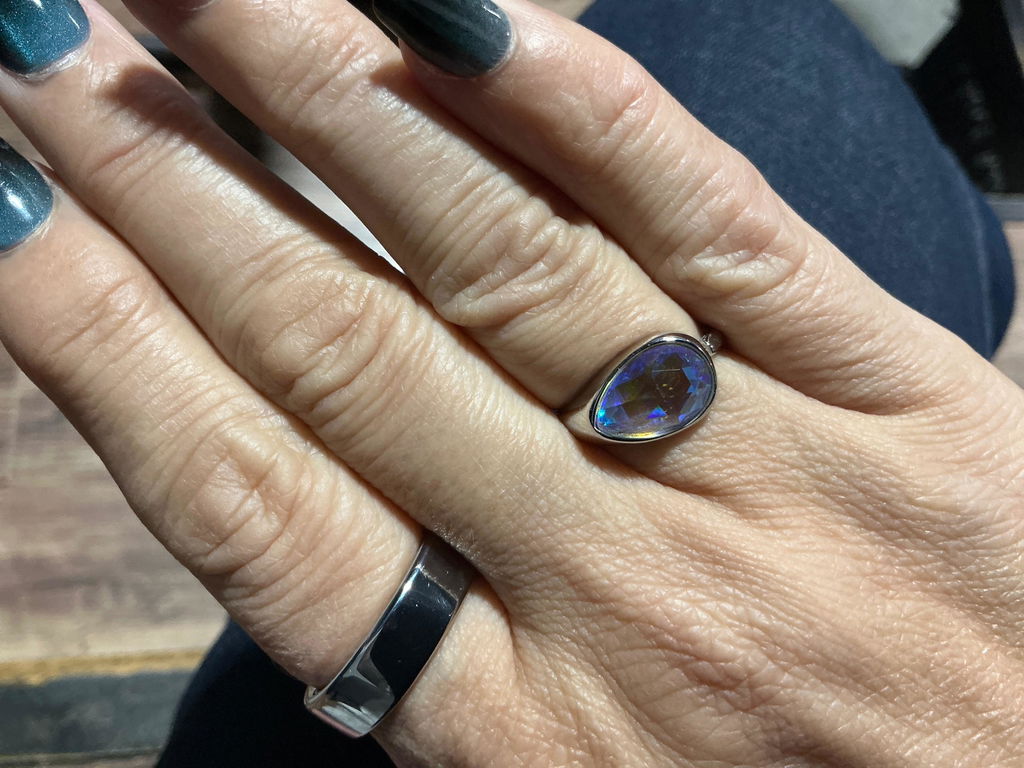
Over the past decade, stainless steel jewelry has gained popularity due to its contemporary appearance, reasonable price, and reputation for durability. Concerns about the long-term behavior of stainless steel, particularly when worn daily, inevitably surface as more individuals turn away from traditional precious metals. If stainless steel jewelry comes into prolonged contact with the skin, one of the most common concerns is whether it will turn green. Customers may make wise choices and wear their jewelry with confidence if they know why certain jewelry discolors and whether stainless steel is one of those materials.
A chemical reaction between some metals and moisture is what causes the green discoloration frequently seen on jewelry, not the skin itself. Metals like copper and brass can oxidize when they come into contact with water, oils, lotions, or perspiration. A green residue that may rub off on the skin is produced by this oxidation. People frequently identify green marks with "cheap" jewelry because many low-cost jewelry pieces are composed of alloys based on copper. But not all metals behave in the same manner, and stainless steel differs fundamentally from other alloys.
The main ingredients of stainless steel are iron, chromium, and occasionally nickel or molybdenum. The presence of chromium, which creates a thin, imperceptible protective layer on the metal's surface, is what distinguishes stainless steel. By keeping moisture and oxygen out of the metal, this layer greatly lowers oxidation and corrosion. Stainless steel does not rust readily and does not react with the skin like copper-based metals do because of this protective layer. Therefore, under typical conditions, fine stainless-steel jewelry does not turn green.
Even with repeated wear, stainless steel jewelry typically doesn't create green marks on your skin. For those who wear jewelry daily, such as rings, necklaces, bracelets, and earrings, this makes it a great choice. Because it can tolerate perspiration, humidity, and sporadic water contact without deteriorating or discoloring, it is particularly well-liked by people who lead active lifestyles. Solid stainless steel keeps its integrity for years, in contrast to plated jewelry, which can deteriorate over time and reveal reactive base metals underneath.
Nevertheless, there are a few instances in which wearing stainless steel jewelry may cause someone to detect discoloration. In these situations, the stainless steel itself is frequently not the source of the green or dark mark. Alternatively, the wearer's skin chemistry, lotions, perfumes, and cleaning supplies could be the cause. Acids or other chemicals included in some skincare products can react with residue on the surface of jewelry to cause temporary discoloration. Furthermore, other metals may be the cause of the response if stainless steel jewelry is combined with them in clasps or decorative accents.
The grade and quality of the stainless steel utilized in the jewelry are another crucial consideration. Not every stainless steel is made equally. Higher-grade stainless steel, such as 304 or 316L (sometimes known as surgical or medical-grade stainless steel), is made especially to be hypoallergenic and resistant to corrosion. These grades are very rare to discolor skin and are frequently used in premium stainless-steel jewelry. Although it is still rare, lower-grade stainless steel, which could have higher impurity levels, might react in extreme circumstances.
When wearing jewelry, those with sensitive skin or metal allergies frequently worry about reactions. Although nickel is included in some stainless-steel formulations, it is firmly linked within the alloy and does not readily seep onto the skin. This makes stainless steel a pleasant and safe choice for the majority of people. Medical-grade stainless steel is frequently used in surgical tools and body jewelry because it is especially suitable for sensitive skin. Stainless steel jewelry is much less prone to irritation, rashes, or discoloration than jewelry made of copper or nickel.
The behavior of jewelry on the skin can also be influenced by environmental conditions. Over time, exposure to saltwater or chlorine, high humidity, and profuse perspiration can all alter the appearance of any metal. Long-term contact with harsh chemicals, including bleach or strong cleaning agents, can degrade the sheen of stainless steel, despite its corrosion resistance. Even in these situations, discoloration typically affects the jewelry rather than causing the skin to turn green. Stainless steel jewelry can maintain its beauty and avoid residue accumulation that could result in transient marks with routine cleaning and appropriate storage.
The fact that stainless steel jewelry requires less upkeep is one of its key benefits. Stainless steel requires little maintenance to maintain its color and sheen, in contrast to silver, which can tarnish, or gold-plated jewelry, which can fade or chip. To keep everything appearing brand new, a quick cleaning with water and light soap is typically enough. The likelihood of any surface residue developing is significantly decreased by completely drying the jewelry after washing or exposure to water. Stainless steel is particularly desirable for daily use and travel due to its ease of maintenance.
It's also important to dispel the myth that jewelry with a green mark is inherently of low quality. Although green discoloration is frequently linked to copper, it can occasionally be brought on by outside variables unrelated to the metal itself. Sweat and skincare products, for instance, might react to create markings that are easily removed. In some situations, the problem can be fixed by changing the goods or by routinely cleaning the jewelry. Persistent green staining in stainless steel is a clear sign that the piece may contain other reactive components or may not be made entirely of stainless steel.
It's crucial to get stainless steel jewelry from reliable vendors who properly identify the grade and material. Higher-quality items intended for skin contact are denoted by terms like "stainless steel," "surgical steel," or "316L stainless steel." Steer clear of pieces that are only "metal" or "silver-tone," as these are more likely to be plated alloys that will deteriorate over time. Purchasing real stainless-steel jewelry guarantees comfort, longevity, and peace of mind.
Stainless steel jewelry is among the most dependable and skin-friendly solutions available today because it doesn't turn green under typical circumstances. It can be worn every day without worrying about skin discoloration because of its resistance to oxidation, corrosion, and moisture. Rare instances of markings could result from mixed materials or outside influences, but they are not intrinsic problems with stainless steel. Stainless steel is still a great option for anyone looking for fashionable, reasonably priced, long-lasting jewelry that keeps its beauty.